Last Updated: October 26, 2026
Quick Summary
To identify quality streetwear, check fabric weight of 8-10 oz/yd² for t-shirts and 10+ oz/yd² for hoodies, examine seams for 8-10 stitches per inch with tight even spacing, and inspect print quality for smooth texture with clean edges and rich color. Quality hardware like solid zippers and secure buttons, plus realistic care instructions, further signal durability.
- Fabric weight is measured in ounces per square yard; quality t-shirts are 8-10 oz/yd² and hoodies are 10+ oz/yd².
- Count stitches per inch on seams; quality pieces have 8-10 stitches per inch with even spacing and no gaps.
- Cotton-blend fabrics with 15-30% polyester outperform pure cotton by reducing pilling, shrinkage, and wrinkling.
- Quality screen prints feel smooth and slightly raised with clean edges; poor prints are flat, blurry, and feel stiff or plasticky.
- Test hardware by zipping zippers, pressing buttons, and checking metal accents for solid weight and smooth function.
Table of Contents
- Why Identifying Quality Streetwear Matters
- Best Fabrics for Streetwear and How to Check Them
- How to Check Garment Stitching for Durability
- Evaluating Print Quality and Durability
- Hardware and Finishing Details That Signal Quality
- Streetwear Quality Checklist for Online and In-Store Shopping
- How to Care for Graphic Streetwear to Preserve Quality
- Start Shopping with Confidence at TBF Apparel
- Frequently Asked Questions
Why Identifying Quality Streetwear Matters
Buying streetwear can feel like a gamble. You find a piece you love at a reasonable price, but will it hold up after five washes? Will the graphic fade or the seams split?
This guide from TBF Apparel breaks down how to identify quality streetwear before your money leaves your wallet. According to Baymard Institute's apparel UX research, 90% of apparel sites fail to let users properly assess product appearance, size, or fit.
Quality streetwear isn't about brand names or hype. It's about fabric weight, seam construction, print durability, and hardware that won't fail, markers that separate pieces lasting years from ones that fall apart in months.
The stakes matter. A $50 hoodie that lasts two years costs $25 per year. A $50 hoodie that falls apart in three months costs $200 per year.
Best Fabrics for Streetwear and How to Check Them
The fabric is where quality begins. A well-constructed piece built from cheap material will still disappoint, but solid construction on premium fabric creates something that improves with age.
Fabric Weight and Composition
Fabric weight tells you density, durability, and how the piece will drape and feel.
Fabric weight is measured in ounces per square yard (oz/yd²). Heavier isn't always better, but it's a reliable signal. A lightweight t-shirt at 5 oz/yd² feels thin and flimsy.
Look at the product specifications. TBF Apparel's TBF Washed Oversized Hoodie specs it at 10.5 oz/yd², which means it has real weight and won't collapse after a few washes.

Cotton-blend fabrics dominate streetwear because they balance comfort, durability, and cost. A 100% cotton piece breathes better but wrinkles more and shrinks easier.
Check the fiber content on product listings. Quality streetwear typically uses:
- 85-100% cotton with 0-15% polyester for t-shirts and tees
- 50-60% cotton with 40-50% polyester for fleece and sweatshirts
- 70-80% cotton with 20-30% polyester for denim and jackets
Cotton-Blend vs. Pure Cotton
Pure cotton feels softer initially and breathes better, but it shrinks unpredictably, wrinkles faster, and pills quicker with wear.
Cotton blends trade a little softness for real durability gains: polyester fibers reinforce the cotton, reducing pilling and shrinkage.
Here's the practical difference: a pure cotton hoodie might feel incredible on day one but look worn after 15 washes.
Don't get seduced by "100% cotton" marketing. It sounds premium, but quality streetwear brands are honest about blends because they know blends perform better.
How to Check Garment Stitching for Durability
Stitching separates quality from garbage. A piece can have premium fabric, but poor stitching will unravel it within weeks.
Seam Construction and Stitch Density
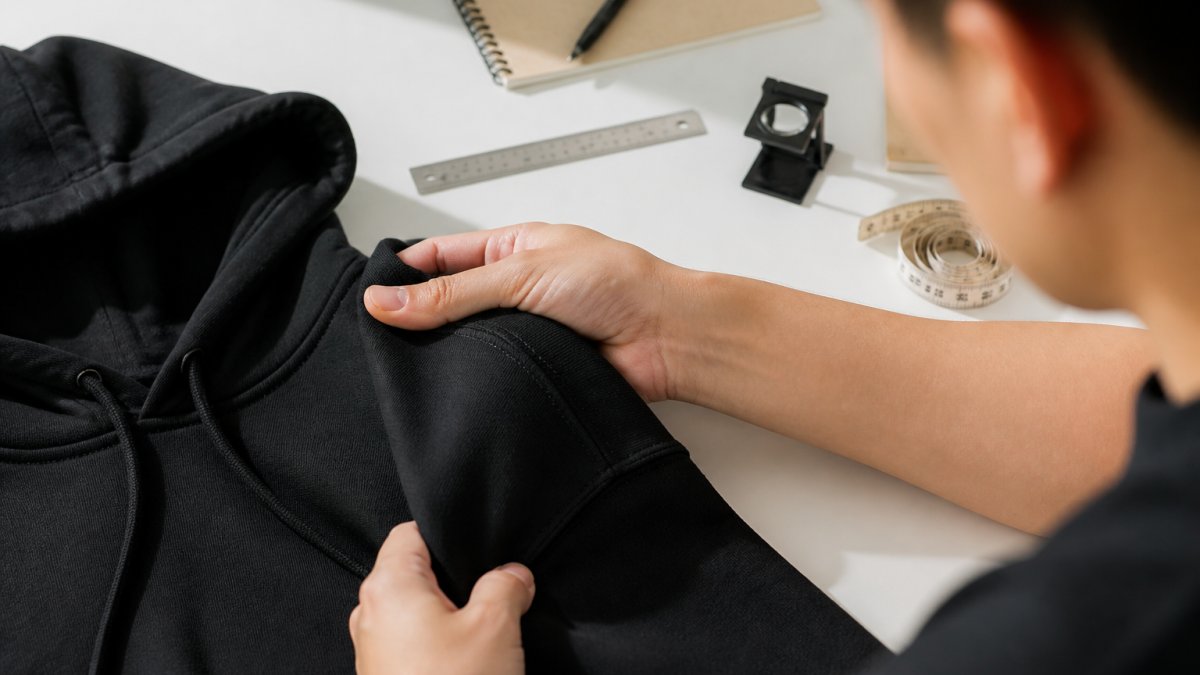
Run your finger along the seams.
Stitch density is the number of stitches per inch. Count them if you're serious: quality pieces have 8-10 stitches per inch.
Thread color matters too. Cheap manufacturers use contrasting thread that stands out; quality brands match thread to fabric or use neutral colors.
Check seams from the inside when possible, that's where you see the real work.
At TBF Apparel, our Unisex Vintage Wash Full-Zip Denim Jacket features a vintage washed finish and full-zip front.

Hems, Necklines, and Reinforced Stress Points
Hems and necklines fail first on low-quality pieces because they're the most-handled areas.
Quality hems are double-stitched or reinforced with a fold. They feel solid, not flimsy. Necklines on quality t-shirts and hoodies have ribbing or binding that won't stretch out or curl.
Look for reinforced stress points:
- Armhole seams (where sleeves meet body)
- Shoulder seams (where weight hangs)
- Pocket corners (where hands pull)
- Collar attachment points
Budget brands skip reinforcement here. Quality brands add extra stitching or patches to prevent tears. It costs more but prevents failure.
Evaluating Print Quality and Durability
A faded, cracking graphic turns a cool piece into trash.
Screen Printing vs. Embroidery
Screen printing is the standard for graphic tees and hoodies.
Poor screen printing uses thin ink that soaks into fabric, looks flat and faded immediately, and may feel stiff and plasticky.
Embroidery uses thread stitched into fabric. It's more durable than printing but more expensive. Embroidered graphics last longer and look premium, but they add weight and cost.
Check the product photos closely. Can you see the graphic texture? TBF Apparel's TBF Terry Raw Edge T-Shirt features a soft texture and raw edges.

Signs of Print Durability
Examine the print edges. Quality prints have clean, sharp edges. Budget prints have blurry or feathered edges where ink bleeds into fabric.
Rich, deep colors signal quality ink; washed-out or pale colors suggest thin, low-quality ink.
Check the back of the piece. Quality prints don't bleed through to the back side.
Feel the print. It should feel smooth, not stiff or plasticky. Quality ink moves with the fabric. Poor ink cracks and peels as the fabric flexes.
The care instructions matter too. Quality prints survive cold water washing and low-heat drying.
Hardware and Finishing Details That Signal Quality
Zippers, buttons, drawstring toggles, and metal accents reveal overall quality.
Quality zippers slide smoothly, have substantial weight, and don't catch fabric; budget zippers are flimsy and jam constantly.
Check buttons: quality ones are sewn securely with reinforced thread paths that won't snap off, not tacked on loosely.
Metal accents like eyelets should feel solid, not hollow.
Look at label stitching.
These details cost pennies to do right but signal a brand cares about the whole piece, not just cutting corners.
Streetwear Quality Checklist for Online and In-Store Shopping
Use this checklist before you buy. It takes two minutes and saves you from regret.
Before You Buy: Online Inspection
Online shopping requires extra diligence. You can't feel the fabric, but you can still gather clues.
- Check fabric weight and composition. Is it listed? Does it match quality standards (8+ oz for t-shirts, 10+ oz for hoodies)?
- Read the full product description. Does the brand explain construction details? Or just hype the design?
- Examine product photos closely. Can you see stitch detail? Is the print texture visible? Do seams look reinforced?
- Look for care instructions. Are they realistic? Do they suggest the piece can handle normal washing?
- Check customer reviews. Do people mention durability? Do photos show the piece after multiple washes?
- Verify sizing details. Are measurements provided? Can you compare to pieces you own?
- Look for transparency. Does the brand explain where it's made? What materials it uses? Quality brands are transparent.
In-Store Inspection Steps
In-store shopping lets you verify everything physically. Take your time with these steps.
-
Feel the fabric. Run it through your hands. Does it feel substantial? Soft but dense? Or thin and flimsy?
-
Check the weight. Pick it up. Does it feel like quality? Or does it feel hollow and cheap?
-
Inspect seams closely. Look at the inside. Are stitches even and tight? Can you see individual stitches clearly?
-
Flex the piece. Bend seams gently. Do they feel strong? Or do they feel like they might split?
-
Examine hems and necklines. Are they reinforced? Do they feel solid or flimsy?
-
Check graphics. Feel the print. Is it smooth or stiff? Are edges clean or blurry?
-
Test hardware. Zip zippers. Press buttons. Do they feel solid?
-
Look at labels. Are they sewn securely? Does the stitching look careful?
-
Check for loose threads. Any dangling threads or unfinished edges? That's a sign of poor quality control.
-
Compare to alternatives. If you're deciding between pieces, hold them side by side. The quality difference becomes obvious.
This checklist transforms you from a casual browser into someone who actually evaluates what they're buying. Most shoppers skip these steps. That's why they end up with pieces that fall apart.
| Quality Signal | What to Look For | Red Flag |
|---|---|---|
| Fabric Weight | 8+ oz/yd² for tees, 10+ oz/yd² for hoodies | Listed as "lightweight" or no weight listed |
| Stitching | 8-10 stitches per inch, even spacing, tight seams | Loose threads, uneven stitches, gaps between stitches |
| Print Quality | Smooth texture, clean edges, rich color | Flat appearance, blurry edges, pale color |
| Hardware | Solid zippers, secure buttons, substantial metal accents | Flimsy zippers, loose buttons, hollow metal |
| Care Instructions | Normal washing and drying recommended | Hand wash only, air dry always, dry clean only |
How to Care for Graphic Streetwear to Preserve Quality
Quality pieces deserve proper care.
Turn pieces inside out before washing. This protects graphics from friction and fading.
Use mild detergent. Heavy detergents break down fibers and fade colors.
Dry on low heat or air dry. High heat damages elastic, shrinks fabric, and accelerates fading.
Don't over-wash. Wear pieces multiple times before washing. The fewer wash cycles, the longer they last.
Store properly. Hang hoodies and jackets. Fold t-shirts to prevent stretching.
Follow the care instructions on the label. They're written for that specific piece.
The Modern Streetwear Trends for 2026: The Complete Guide article digs deeper into how trends affect care and longevity.
Start Shopping with Confidence at TBF Apparel
Identifying quality streetwear comes down to looking at the details most people skip.
At TBF Apparel, we build pieces that pass every test on this checklist. Our hoodies use 10.5 oz fleece with reinforced seams.
The card-themed designs and vintage wash finishes aren't just aesthetic choices. They're backed by construction that holds up.
Stop guessing. Your next piece of streetwear should be something you'll wear for years, not months. Printful's research on consumer values shows that authenticity and durability drive streetwear choices.
Shop all and find the pieces that fit your style and your standards.
Quality streetwear isn't about spending more. And according to Fortune Business Insights' streetwear market analysis, the streetwear market is projected to reach $397.97 billion by 2026, which means competition is fierce and quality matters more than ever.
Frequently Asked Questions
What fabric weight should I look for when buying quality streetwear?
Heavyweight fabrics (10+ oz for fleece, 9-10 oz for denim) hold their shape and resist pilling better than lightweight alternatives. TBF Apparel's Washed Oversized Hoodie uses 10.5 oz fleece, which provides the durability and structure needed for pieces that last through regular wear. Check the product label or listing for oz/yd² or gsm (grams per square meter) to compare fabric weight across brands.
How can you tell if a graphic print will last on streetwear?
High-quality prints use screen printing or embroidery with proper curing, creating graphics that don't crack, fade, or peel after washing. Examine the print closely: edges should be clean and not bleeding into the fabric, and the design should feel slightly raised or textured, not flat or plasticky. Always follow care instructions like washing inside-out and avoiding high heat to preserve print durability over time.
What should I check when buying a streetwear jacket for quality?
Inspect the seams for tight, even stitching with no gaps or loose threads. Check that the collar lies flat, sleeves are symmetrical, and zippers slide smoothly without catching. Examine the fabric for consistent color and weave, and verify the weight (moderate to heavyweight denim or canvas is ideal). TBF Apparel's Unisex Vintage Wash Full-Zip Denim Jacket at 9.4 oz provides the weight and construction quality needed for a jacket that holds up through seasons.
Why does care matter when identifying quality streetwear?
How you wash and dry streetwear directly affects how long it lasts. Quality fabrics and construction can fail if exposed to hot water, high heat, or bleach. Streetwear brands that provide clear care instructions (like TBF Apparel's 30°C cold wash, low tumble dry, and low iron guidance) signal confidence in their garment durability. Following these instructions preserves fabric integrity, print quality, and fit for years of wear.
